Jacksonville Gutter Cleaning FAQ, Every Real Question, Answered
Compiled from what homeowners across Duval County actually ask, on the phone, on local forums, and standing in driveways. Plain answers, local numbers, no gatekeeping.
Updated October 2026
Updated October 2026
Cost & quoting
How much does gutter cleaning cost in Jacksonville?
Typically $99 to $179 for a single-story home and $149 to $279 for a two-story, full service. Large or complex rooflines run $229 to $349+. The complete local math lives in our cost guide.
Do you charge to give a quote?
No. Quotes are free, flat, and stated before any work begins. For most homes we can quote from a phone call plus two photos of your roofline; unusual homes get a free walk-around.
Is a $79 gutter cleaning special legit?
Sometimes, as a blower pass. Ask whether downspouts are flushed and tested, whether debris is hauled away, and whether the company is insured. If any answer is no, you're comparing a different, smaller product, not a better price.
Are there discounts for recurring service?
Yes, scheduled two- or three-visit plans run 10 to 20% below one-off pricing per visit, and maintained homes never pay the heavy-neglect surcharge.
Do you offer senior discounts?
Ask when you call, we keep a standing courtesy rate for seniors and for neighbors who genuinely can't do ladder work safely. Nobody should be climbing a ladder because a discount didn't exist.
Timing & frequency
How often should Jacksonville gutters be cleaned?
Twice a year minimum: after the spring oak shed (April to May) and before hurricane season peaks (late May to June), with a post-season visit in November for heavy-canopy homes. Homes under mature live oaks often need three to four visits.
What's the best month for gutter cleaning here?
Late May into June, after the live oaks finish dropping and before storm season peaks. It's the one appointment that protects the house during the year's heaviest rain.
Do Jacksonville gutters really clog in spring, not fall?
Yes, our live oaks shed hardest from roughly March through May, dropping leaves and pollen tassels together. Northern advice about 'fall cleanup' is calendar-backwards for canopy neighborhoods here.
Should I clean gutters after every storm?
After named systems and severe wind events, yes, at least the ground check: overflow marks, downspout discharge, visible roof debris. Ordinary afternoon thunderstorms don't need per-storm service if you're on a twice-a-year rhythm.
How long does a gutter cleaning take?
Most single-story homes take 45 to 90 minutes; two-stories and first-time cleanings run 1.5 to 3 hours. Downspout snaking and hardware fixes add time, the flat quote already accounts for what we see at the walk-around.
The service itself
What exactly is included in your gutter cleaning?
Hand-clearing of every trough, water-flush and test of every downspout, roof valley and edge debris removal, ground cleanup with debris hauled away, a hardware check (hangers, seams, slope), and a before/after photo report.
Do I need to be home?
No, safe access and a working spigot are all we need. The photo report shows you every run before and after, so you can verify the work from your phone.
Do you walk on the roof?
On walkable shingle pitches, yes, where it's the safest and most thorough approach. Tile, metal, and steep pitches are worked from ladders and extension tools instead, those surfaces shouldn't take foot traffic.
What do you do with the debris?
It's bagged and leaves with us, and the beds, walks, and driveway below are blown or rinsed clean. 'We leave it looking like we were never there, except the gutters work' is the standard.
Can you clean gutters in the rain?
Light rain, yes, it actually helps verify flow. Lightning or high wind, no; Florida afternoon cells pass quickly and we'll wait one out rather than rush a roofline.
My gutters have guards, can you still clean them?
Yes: surface cleared, sections lifted, sediment underneath removed, everything re-seated properly. Details on the guard cleaning page. Guarded systems carry a modest labor surcharge.
Trust & safety
Are you licensed and insured?
Yes, general liability coverage on every crew, certificate of insurance available on request before the visit. Never let anyone uninsured on your roofline; a fall can otherwise become your homeowner's-policy problem. Learn more about how we operate.
Do I tip the crew?
Never expected. If the crew earned it, a written review does more for a local company than cash, reviews are how Jacksonville homeowners actually find us.
What if it rains the day after and a gutter still overflows?
We come back and make it right at no charge, that's the rain-tested promise. A cleared system should handle an ordinary Jacksonville storm; if it doesn't, the job wasn't finished.
Is DIY gutter cleaning safe?
On a single-story with a good ladder, a helper, and dry conditions, reasonably, and we'll respect the choice. Before you climb, see our guide on signs your gutters actually need attention so you know what you are looking for. Second stories, steep pitches, and wet surfaces are where homeowners get hurt; ladder falls are a leading cause of home-maintenance ER visits, which is the honest core of the hire-a-pro argument.
What should I ask any gutter company before hiring?
Three questions sort the field fast: Are you insured, and will you send the certificate? Do you flush and test every downspout? Does the debris leave with you? Then ask what happens if the system overflows in the next rain.
Jacksonville-specific
Do Florida homes even need gutters?
Florida code doesn't require them, which is why many homes here were built without, but 51+ inches of annual rain on slab foundations makes a strong case. Uncontrolled roof runoff erodes the sandy soil at the slab, splashes siding, trenches beds, and feeds the exact pooling flood-conscious neighborhoods fight. If you have gutters, keeping them flowing is the whole ballgame.
Why does everyone here talk about live oaks and gutters?
Because live oaks are Jacksonville's signature canopy tree and they shed heavily in spring, leaves plus pollen tassels that mat in troughs and thread through guards. Canopy neighborhoods like Mandarin, Ortega, Riverside, and San Marco are the busiest clog zones in the city.
Does salt air at the Beaches change anything?
Yes, salt accelerates corrosion on fasteners, seams, and cut edges, so Beaches homes get a closer hardware inspection and we flag rust early. Details on the Beaches page.
Can clogged gutters cause foundation problems on a slab?
Over time, yes. Overflow concentrates water at the slab edge, where sandy soil erodes and settles unevenly, the slow-motion version of foundation trouble. Slab homes skip basement flooding but not water management.
Do clogged gutters attract pests here?
Standing trough water breeds mosquitoes nearly year-round in our climate, and damp debris shelters roaches and gives birds and squirrels nesting material at your roofline. The trough dries within hours once it's cleared and flowing.
What ZIP codes do you serve?
Across Jacksonville and Duval County, 32207, 32210, 32211, 32217, 32223, 32233, 32246, 32250, 32256, 32257, 32258, 32259, 32266 and neighbors, plus Orange Park, Fleming Island, Fruit Cove, Julington Creek, Nocatee, and Ponte Vedra. Full map on the service area page.
What's the difference between gutter cleaning and eavestrough cleaning?
Nothing, really. Eavestrough cleaning is the Canadian and northern US term for exactly the same service: clearing the horizontal channel at the roofline and flushing the downspouts. If you moved here from Canada or the upper Midwest and searched "eavestrough cleaning," you found us. Same service, same flat quote, same rain-tested standard. Florida contractors call them gutters.
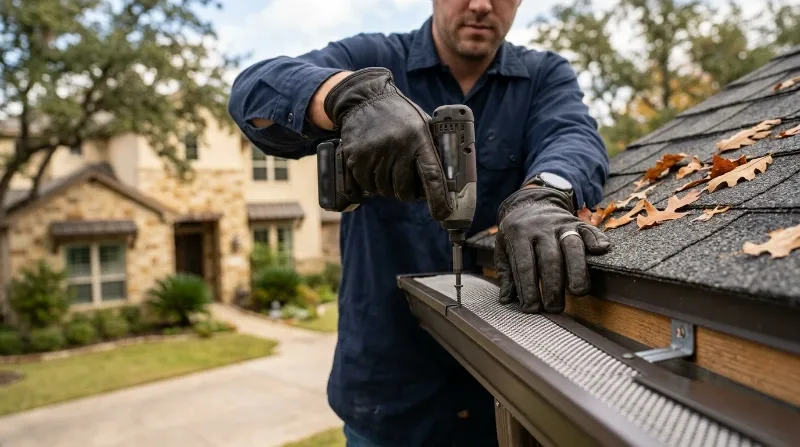
Debris-lined gutters are wildlife habitat, birds nest in them, squirrels stash in them, mosquitoes hatch in them. One more argument for a clear trough.
Didn't find yours? Ask directly, real questions from homeowners are where half this page came from.
Want the full schedule? Read how often you should clean your gutters in Jacksonville.
One more question? Just call.
Flat quote first, work second. Most Jacksonville quotes take under ten minutes.