Gutter Guard Cleaning in Jacksonville
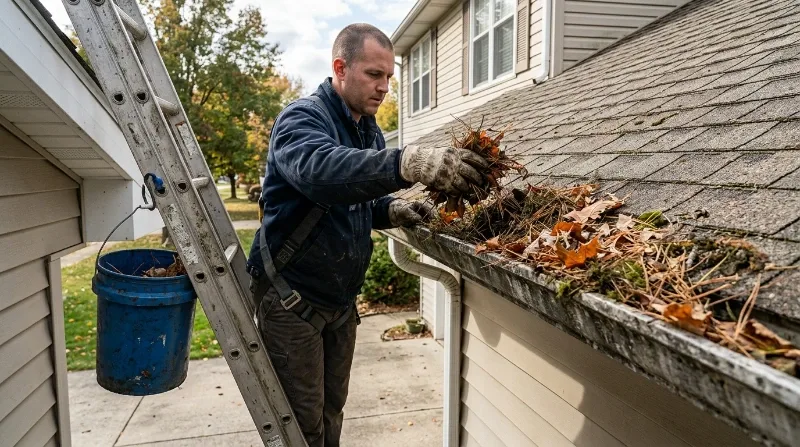
Guards reduce cleaning, they don't end it. Pine needles, pollen, and shingle grit still get through every system sold, and the guard surface itself mats over. We clear on top, underneath, and down the spout, then re-seat every section.
See the complete service list including what we do under every guard section.
Jacksonville canopy vs. every guard on the market
Guard marketing is written for northern leaf-fall. Our debris is different: live oak leaves are small and stiff, pollen tassels are practically designed to thread through mesh, pine needles slide into any gap, and summer storms deliver shingle grit by the cupful. Fine material accumulates under guards as a dense sediment paste; coarse material accumulates on top as a mat that sheds rain straight over the edge.
None of this means guards are useless, a good screen genuinely stretches the service interval and keeps out the bulk debris that causes fast clogs. It means "maintenance-free" was always a sales line. If you're weighing an install, read our honest take on whether gutter guards are worth it in Jacksonville before you sign anything.
- Guard surfaces brushed and blown clear of matting
- Sections lifted or unclipped; sediment underneath cleared by hand
- Downspouts flushed and tested below the guard line
- Every section re-seated flush; damaged sections photographed and reported
Guarded-gutter questions
Do gutters with guards still need cleaning?
Yes. Guards slow large leaves but pine needles, oak pollen tassels, seed casings, and shingle grit still get in, and debris also builds a mat on top of the guard that sheets water straight over the edge. Guarded systems in Jacksonville typically need service every one to two years.
This surprises a lot of owners who were sold 'never clean your gutters again.' What guards genuinely do is stretch the interval and keep out the bulky stuff. What they can't do is repeal our canopy: fine debris works through every mesh and screen sold, and the material on top has to be brushed off or the guard itself becomes the clog.
How do you clean gutters that have guards installed?
We brush and blow the guard surface clear, then lift or unclip sections to clear the fine sediment underneath, flush the downspouts, and re-seat every section properly. Guards that are screwed or snap-locked take longer than drop-in screens, which is why guarded homes carry a modest surcharge.
Re-seating matters as much as the clearing. A guard section left proud or misaligned becomes a debris scoop in the next storm. If we find damaged or curling sections, we'll photograph them and tell you whether they're worth keeping.
Why is water overflowing my gutters even though I have guards?
Almost always one of three things: a debris mat on top of the guard shedding water past the trough, fine sediment paste underneath choking flow, or a downspout blockage below the guard line. All three look identical from the ground, overflow in heavy rain.
This is the most common guarded-home service call we get after big June and September storms. The guard hides the problem from view, so owners assume the gutters are fine right up until water is sheeting over the front door.
I just had leaf guard installation in Jacksonville — when do I need my first cleaning?
Plan on twelve to eighteen months after leaf guard installation Jacksonville FL, regardless of what the installer told you. The first service call after any new guard install is usually the hardest because the installation process itself leaves debris, fastener shavings, and caulk scraps in the trough that wash down and pack against the first downspout screen. We've serviced brand-new guard systems that needed a full clean within a year of install. Book the first visit, see what we find, then set a realistic schedule from there.
What actually builds up under Jacksonville gutter guards
Guards slow the entry of large debris, but they do not stop the fine material that causes most of the real problems in Jacksonville. Oak pollen paste is the main offender. During spring shed from March through May, live oaks release pollen and tassels simultaneously. The tassels get caught on or above the guard, but the fine pollen washes through and settles as a paste on the bottom of the trough. Over a full spring season this paste builds up thick enough to restrict water flow even when the guard surface looks completely clear.
Slash pine needles are the second issue. Most guard systems are designed for broad deciduous leaves. Pine needles are narrow enough to slip between guard openings and long enough to bridge across the trough once inside. They accumulate horizontally in a layer that standard flushing from above does not reach because the guard prevents the water from getting a direct angle on the build-up.
Spanish moss is the third. It compresses into a paste-like layer that adheres to the trough bottom and does not rinse out. If moss gets under the guard during a storm and settles, it behaves like a sponge that holds moisture against the fascia.
The lift-and-clear approach we use on every guard visit addresses all three. We lift each guard section, clear what has built up underneath, rinse the trough bottom directly, and re-seat the guard properly before moving to the next section. Visual inspection from above tells you nothing about the condition underneath.
Guard types we service — and what each one costs to clean
Residential gutter installation in Jacksonville has landed on a few dominant guard styles, and cleaning cost tracks directly to how the guard is attached.
Drop-in screens and snap-on mesh are the easiest: sections lift out in seconds. Most homes with standard residential gutter installation and drop-in screens fall in the lower third of our pricing. Micro-mesh systems, including LeafBlaster, LeafBlasterPro, and Leaf Relief — the micro-mesh installs popular in Jacksonville over the last few years — are tighter and take longer to clear properly, but they also accumulate less bulk debris between visits. Screwed-down guards, including some Double Pro configurations and RainPro gutter setups, add time because each fastener has to come out and go back in without stripping. We price these individually after a quick look at the type.
Spectra gutter systems, common in older Duval County neighborhoods, use a ribbed aluminum design that traps fine debris in the channels. If you have a Spectra system, expect sediment between every rib that a surface brush alone won't reach. We lift the sections, clear the channels, and re-seat them — same lift-and-clear process as any other guard type.
For homes in Clay County, gutter installation clay county typically used the same product lines as Duval, so if you're calling from Orange Park, Fleming Island, or Oakleaf, the service process is identical. We serve Clay County on the same schedule as Jacksonville proper.
One note on gutter protection installation with warranty claims: guard warranties almost universally require professional cleaning at a manufacturer-specified interval to stay valid. We can document each visit with before-and-after photos if you need a paper trail to keep that warranty intact. Ask when you call and we'll add it to the invoice notes at no extra charge.
Before You Buy or Clean Guards
Still deciding whether guards are worth the money? Read are gutter guards worth it in Jacksonville and the guard-sales section of what gutter cleaning really costs in 2026.
Guards behave differently by location. Salt and sand pack under mesh near the water in Hollywood, oak catkins mat on top of screens in Gainesville, and Mandarin canopy homes need the spring timing covered on the Mandarin gutter cleaning page.
Guards on, water still pouring over? We see it weekly.
Flat quote first, work second. Most Jacksonville quotes take under ten minutes.