Gutter cleaning in San Marco
San Marco pairs Avondale-grade oak canopy with river-adjacent drainage that punishes sloppy water management. Here, a clean, flowing gutter system isn't cosmetic upkeep, it's how you keep your roof's runoff out of an argument your street is already having with water.
Downspout Cleaning & Flushing in San Marco
River adjacent lots near the Square punish downspouts that discharge too close to the foundation. Every spout is flushed until it runs clear, and we check exactly where the water lands afterward, not just whether it flows. How we test every spout.
Gutter Brightening in San Marco
Canopy streets near Granada and the river keep gutter faces shaded and streaked. Brightening lifts oxidation and tiger stripe staining by hand, restoring the clean look these walkable blocks are known for. Read about tiger stripe removal.
Gutter Guard Cleaning in San Marco
Guards on San Marco's oak canopy homes still trap pollen paste and fine debris underneath. We lift, clear, and re seat properly so the system keeps working through the next storm, not just the next dry week. Full guard cleaning details.
Cleaning & Minor Repair in San Marco
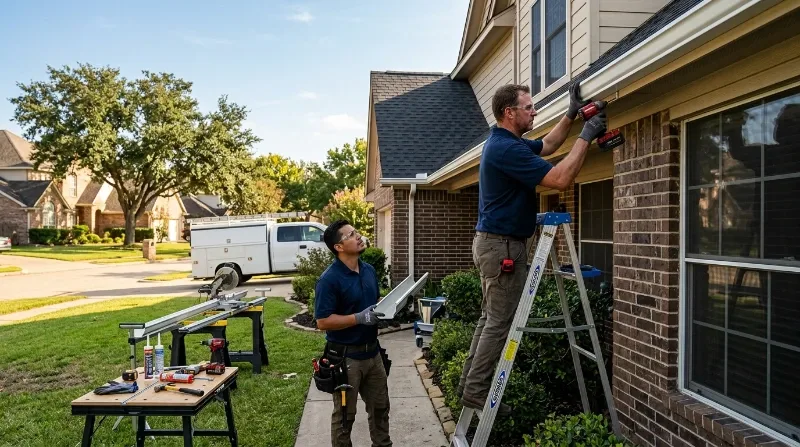
River adjacent soil does not forgive a sagging run. Loose hangers, leaking seams, and slope corrections happen during the same cleaning visit, before overflow finds the slab. Full repair service details.
Storm-Season Prep in San Marco
San Marco's combination of canopy debris and river drainage means storm prep here is about more than leaves. Pre season clean outs and post storm checks keep runoff moving away from foundations that already sit close to the water table. Read the storm-season guide.
Emergency / Same-Day Gutter Cleaning in San Marco
Overflow near the river moves fast into places it should not. Same day visits carry standard flat pricing, and active overflow near a foundation gets priority scheduling. Read the emergency service guide.
Beautiful canopy over drainage that keeps score
The oaks over the Square and the residential blocks behind it shed the same way Mandarin's do, hard, in spring, straight onto complex older rooflines. What's different here is the ground game: parts of San Marco sit low, the water table sits high, and heavy-rain pooling is a lived local reality rather than an abstraction. On lots like these, gutter overflow doesn't just streak the stucco; it saturates soil that had no spare capacity, right at the slab edge.
So our San Marco checklist leans on the drainage half of the job: every downspout flushed and water-tested, discharge direction checked so spouts throw water away from the foundation and not into a low corner of the lot, and underground drain mouths (common here) checked for silting. The trough is half the system; on these blocks the bottom half matters more.
- Downspout flow and discharge direction verified on every visit
- Underground drain outlets checked where downspouts are piped
- Half-round and older systems handled with the same care as our Avondale work
- 2 to 3 visit rhythm; post-storm passes after named systems
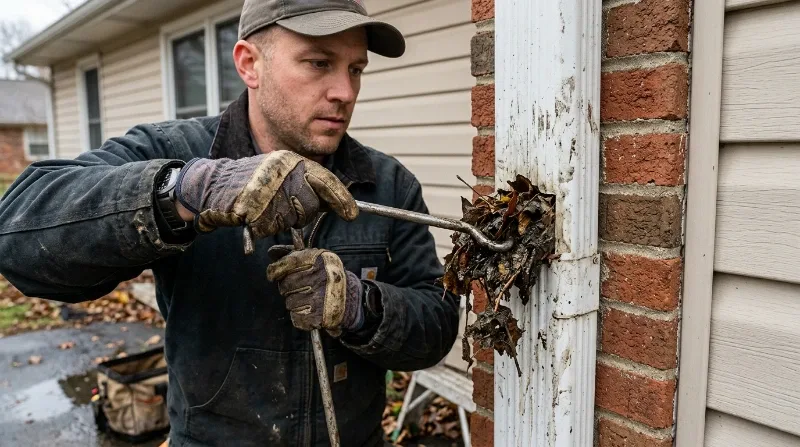
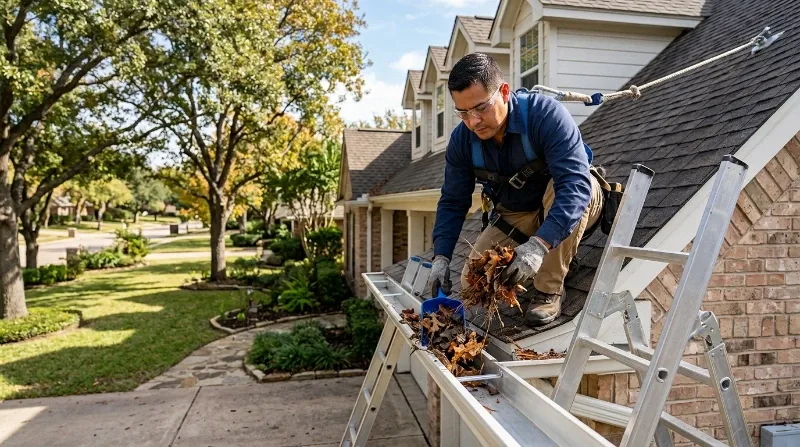
The test that matters on low-lying lots: strong discharge, aimed away from the slab.
Every visit, the full job
Troughs hand-cleared
Scoops and gloves down to bare metal, canopy debris lifted out and bagged, never blown toward river-adjacent beds.
Downspouts water-tested
Every spout flushed until it runs clear, with the discharge point checked so water lands away from the slab. Our downspout testing →
Photo report & rain-tested promise
Before and after shots of every river-adjacent run. If a cleared trough overflows before the next visit, we return free.
San Marco questions
Why does gutter overflow matter more near the river?
Because San Marco's flood-conscious blocks already fight standing water at street level, the neighborhood's drainage challenges are well known, and a blocked gutter adds your roof's runoff, over a thousand gallons per inch of rain, to exactly the wrong spot at the base of your own walls.
Clean gutters don't fix municipal drainage, and we'd never claim they do. What they control is the one water source that's entirely yours: whether your roof's share of a downpour is placed ten feet from the slab or dumped against it.
Do you work around the square and the older blocks?
Yes, from the San Marco Square blocks out through Granada, Colonial Manor, and the river streets, including the older homes with the same half-round systems we service in Avondale.
Tight lots and mature landscaping are the norm here, so we plan ladder placement on the walk-around and bag debris as we go. Your camellias were there long before us; they'll be fine after us.
How often should San Marco homes be cleaned?
Two to three visits a year: canopy streets follow the spring-shed-plus-June rhythm, and river-adjacent homes benefit from a post-season check in November so winter rains meet an empty system.
If your block took storm debris in a named system, add the post-storm pass, wind-stripped oak matter converts to downspout clogs within one or two ordinary rains.
Under oak canopy? Read why live oaks clog gutters every spring.
Your block already knows what water does. Keep yours moving.
Flat quote first, work second. Most Jacksonville quotes take under ten minutes.
Why San Marco Homeowners Call Early
River-adjacent lots near the Square do not forgive a slow overflow the way an inland lot might. We flag drainage direction on every visit here, not just debris, since water finding the wrong path matters more this close to the St. Johns.
Serving Jacksonville from the Westside
See our full Northeast Florida coverage area, or check the complete list of services we run on every San Marco visit.