Gutter cleaning in the Beaches
Out here the enemy isn't just debris, it's chemistry. Salt air works on fasteners, seams, and cut edges year-round, and wind-blown sand settles into troughs as corrosive paste. Beaches gutter service done right is cleaning plus corrosion watch.
Downspout Cleaning & Flushing in the Beaches
Salt air accelerates corrosion at every downspout joint and outlet along the coast. We flush each spout until it runs clear and check fasteners for early corrosion while we are already at the elbow. See how flushing works.
Gutter Brightening in the Beaches
Wind blown sand and salt spray leave a different kind of staining than inland oxidation. Brightening removes it by hand, and we flag any fastener that salt has already started to eat through. See before and after brightening results.
Gutter Guard Cleaning in the Beaches
Salt laden sand settles into guard systems as a corrosive paste, not just ordinary debris. We lift each section, clear the buildup, and inspect for corrosion before re seating, since guards near the water need more frequent checks. See the guard cleaning process.
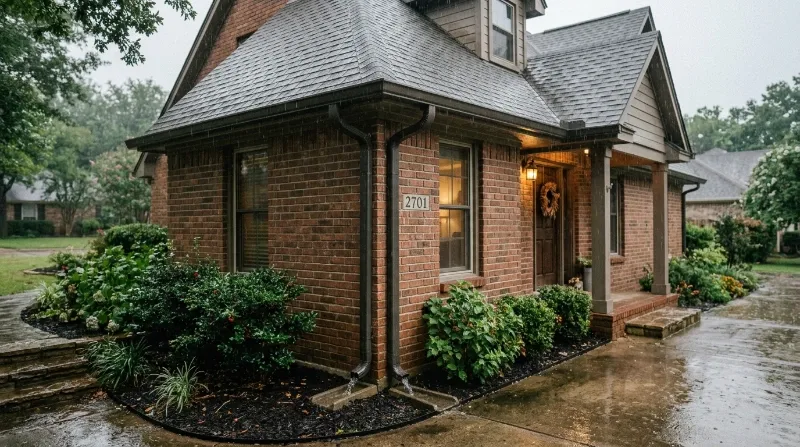
Cleaning & Minor Repair in the Beaches
Salt air works on hangers and seams faster than almost any inland material failure. Loose hangers, leaking seams, and early corrosion get addressed in the same visit, before a fastener fails outright. See the repair and cleaning guide.
Storm-Season Prep in the Beaches
Jax Beach, Neptune, Atlantic, and Ponte Vedra take the first wind and rain when a system moves in. Pre season clean outs and post storm checks matter earlier here, and we inspect for storm driven salt residue along with debris. How storm-season prep works.
Emergency / Same-Day Gutter Cleaning in the Beaches
A storm at the coast means wind, rain, and salt spray all at once. Same day visits get the same flat pricing as inland Jacksonville, with priority given to active overflow and any run showing storm damage. See what counts as an emergency.
Coastal exposure is a maintenance schedule of its own
A gutter system at the Beaches lives a harder life than the same system in Deerwood: salt aerosol settles on every surface and gets to work wherever protection is thinnest, screw heads, rivets, factory-cut ends, scratches in the finish. Left alone, that's how a fifteen-year system becomes a ten-year system. Our service out here folds a corrosion inspection into every cleaning: we photograph early rust and failing fasteners the same way we photograph debris, so you're making replacement decisions years in advance instead of after a run lets go in a nor'easter blow.
The debris profile is its own thing too, palm material that bridges troughs, sand sediment that never composts but never dries either, and the Intracoastal side's pine needles. And because sea-breeze storms arrive with real wind, we treat hanger and strap tension as a standing checklist item, not a call-out extra.
- Corrosion pass every visit: fasteners, seams, cut edges photographed and flagged
- Freshwater rinse of gutter faces, cheap protection in salt air
- Sand sediment scooped fully; it holds moisture against seams if left
- Wind-exposure hardware check on ocean-side rooflines
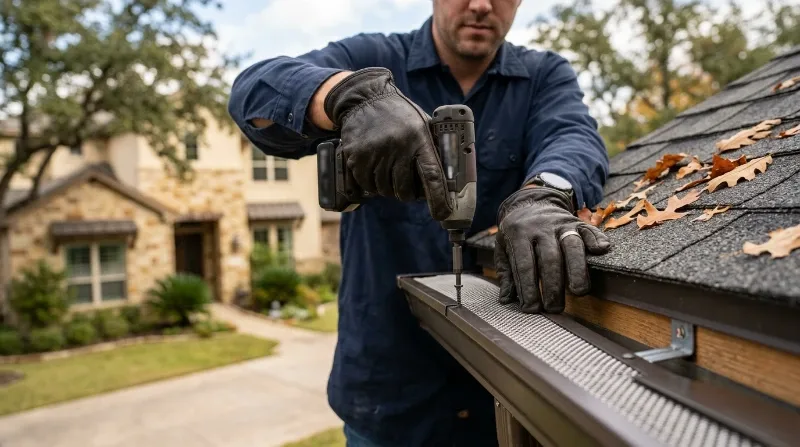
Roofline inspection is half the Beaches job, corrosion shows up top-down before it shows from the street.
Every visit, the full job
Troughs hand-cleared
Scoops and gloves down to bare metal, sand and salt residue lifted out and bagged, fasteners checked as we go.
Downspouts water-tested
Every spout flushed until it runs clear, with an added eye on corrosion at joints salt air reaches first. Downspout flushing, step by step →
Photo report & rain-tested promise
Before and after shots of every coastal run. If a cleared trough overflows before the next visit, we return free.
Beaches questions
Does salt air really affect gutters?
Measurably. Within a couple of miles of the ocean, salt-laden air accelerates corrosion on the system's weak points, steel fasteners, cut aluminum edges, seams, and any spot where the factory finish is scratched. Beaches gutters don't clog faster than inland ones; they age faster.
That's why our Beaches checklist adds a corrosion pass: fastener condition, seam integrity, and early rust flagged with photos while it's still a maintenance note instead of a replacement quote. A freshwater rinse of the faces during service also does more good here than anywhere inland.
Which Beaches communities do you serve?
Jacksonville Beach, Neptune Beach, Atlantic Beach, and Ponte Vedra Beach, plus the Intracoastal-side neighborhoods along the way, ZIPs 32233, 32250, 32266, and 32082.
Coverage runs from the older cottage blocks near the ocean, where mature canopy meets salt air, out to the newer Ponte Vedra and Nocatee-edge communities where builder-grade systems are hitting their first decade.
What debris do Beaches gutters actually collect?
Less oak, more everything else: palm fronds and boots, pine needles on the Intracoastal side, wind-blown sand that settles into a dense sediment, and whatever a sea-breeze thunderstorm strips loose. Sand is the quiet one, it accumulates as a heavy paste that holds moisture against seams and feeds corrosion.
Wind exposure also matters: oceanfront and near-ocean rooflines take more gust loading, so hangers and straps loosen sooner. The hardware check that's routine inland is essential out here.
Coastal homes: use the before-and-after storm gutter checklist.
Salt air never takes a season off. Neither should the checklist.
Flat quote first, work second. Most Jacksonville quotes take under ten minutes.
Why the Beaches Need a Different Checklist
Salt air corrosion moves faster than most homeowners expect, eating at fasteners long before a gutter itself fails. Every coastal visit includes a fastener check most inland cleanings skip, because inland gutters simply do not face the same clock.
Serving Jacksonville from the Westside
See our full Northeast Florida coverage area, or check the complete list of services, salt air corrosion checks included. We also cover Jacksonville Beach specifically along the Pablo Beach corridor, and the Kernan Boulevard corridor in the 32224 ZIP.