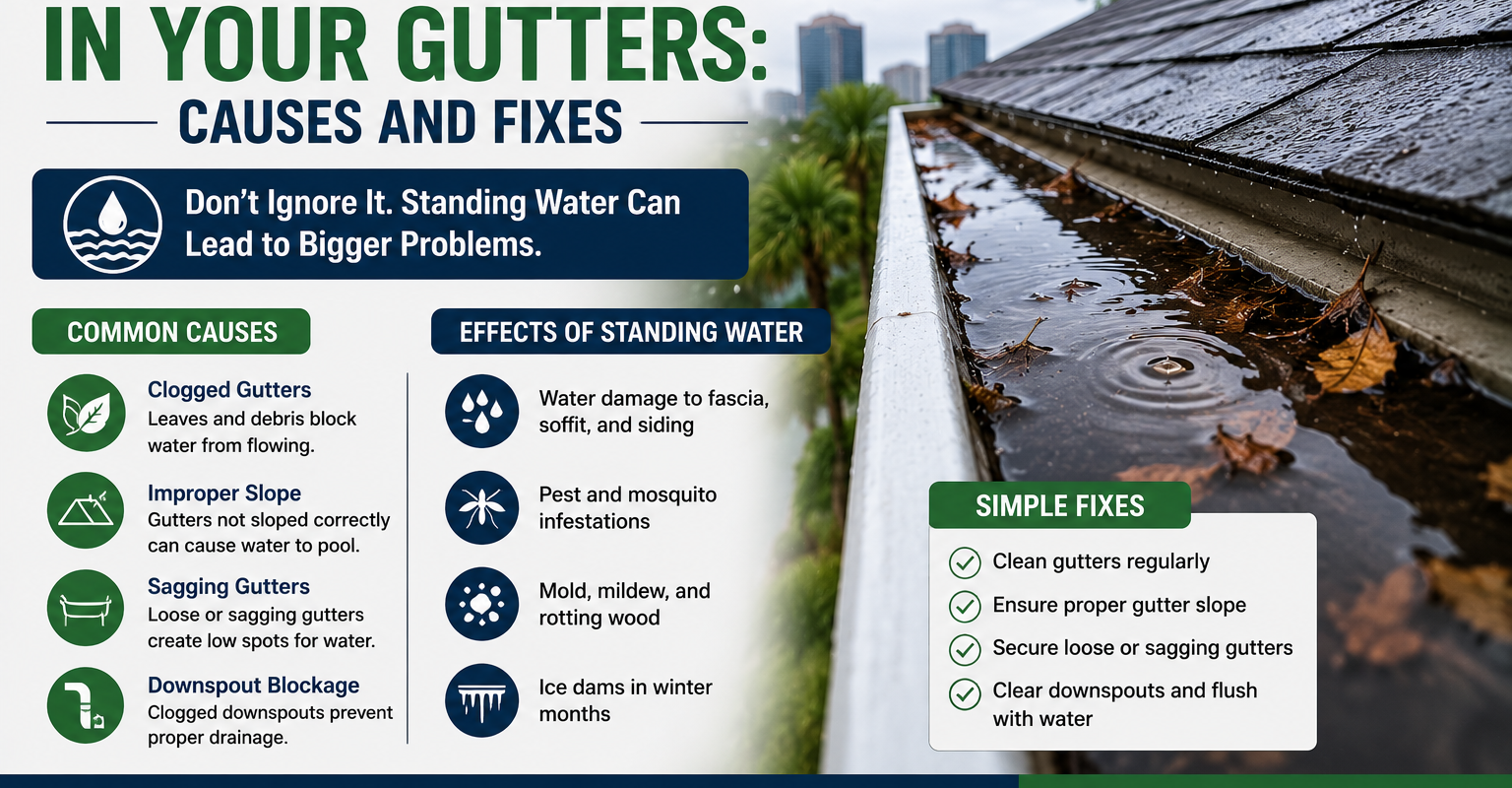
Water sitting in your gutters is an indication that there is something wrong with your gutters. Gutters are supposed to take rainwater off your roof and your foundation. However, when there is still water in the gutters even after it rains, then you have a problem.
Water sitting in your gutters may cause roof leaks, mold growth, wood decay, pests and even foundation problems. All these issues could easily be prevented through routine cleaning of the gutters.
This article will explain the reasons behind water in your gutters, how to fix this issue and maintain proper working of your gutters.
Why Standing Water Is a Problem
Your gutters should empty quickly after it rains. If water stays in them, it can cause several problems around your home.
Standing water can:
-
Damage your roof.
-
Make gutters sag.
-
Attract mosquitoes and other pests.
-
Cause mold and mildew.
-
Lead to wood rot.
-
Damage your foundation.
Cleaning and inspecting your gutters regularly helps prevent these problems.
Common Causes of Standing Water in Gutters
Several issues can stop water from flowing through your gutter system.
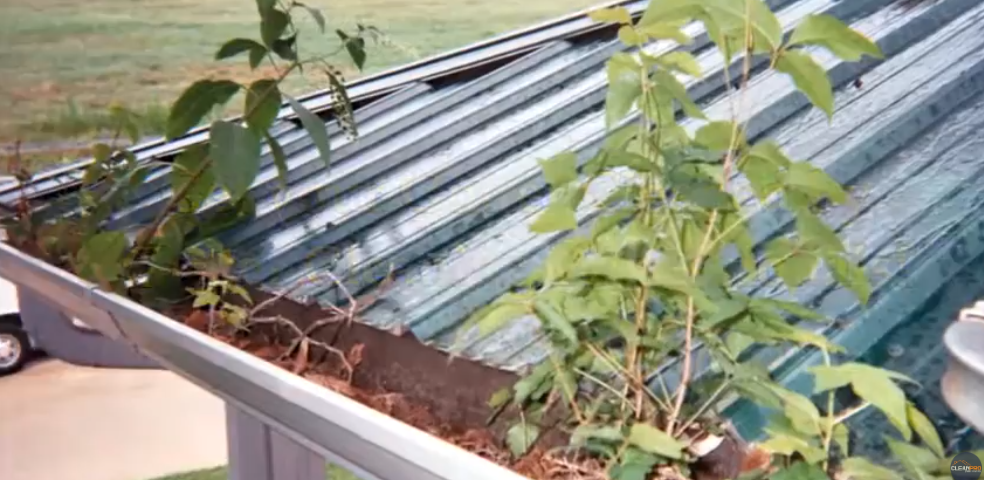
1. Clogged Gutters
Leaves, twigs, dirt, and other debris are the most common cause of standing water. When debris blocks the gutter, rainwater cannot move toward the downspouts.
How to fix it:
-
Remove leaves and debris.
-
Flush the gutters with water.
-
Clean the gutters at least twice a year.
Regular cleaning keeps water flowing properly.
2. Blocked Downspouts
Even clean gutters cannot drain if the downspouts are blocked. Leaves, mud, bird nests, and small branches can block water flow.
How to fix it:
-
Flush the downspouts with a garden hose.
-
Remove any blockages.
-
Check that water flows freely away from your home.
Clean downspouts are just as important as clean gutters.
3. Incorrect Gutter Slope
Gutters need a slight slope so water can flow toward the downspouts. If the slope is too flat or uneven, water will collect in low spots.
How to fix it:
-
Check the gutter slope.
-
Adjust loose sections.
-
Hire a professional if major adjustments are needed.
A proper slope helps water drain quickly.
4. Sagging Gutters
Heavy debris and standing water can cause gutters to sag over time. Sagging gutters create low areas where water collects after every rain.
How to fix it:
-
Tighten loose brackets.
-
Replace damaged hangers.
-
Repair or replace bent gutter sections.
Strong supports keep gutters level and working properly.
5. Damaged Gutters
Cracks, holes, rust, and separated joints can affect water flow. Damaged gutters may leak or allow water to collect in certain areas.
How to fix it:
-
Seal small leaks.
-
Replace damaged sections.
-
Repair loose joints.
Regular inspections help catch small problems before they become worse.
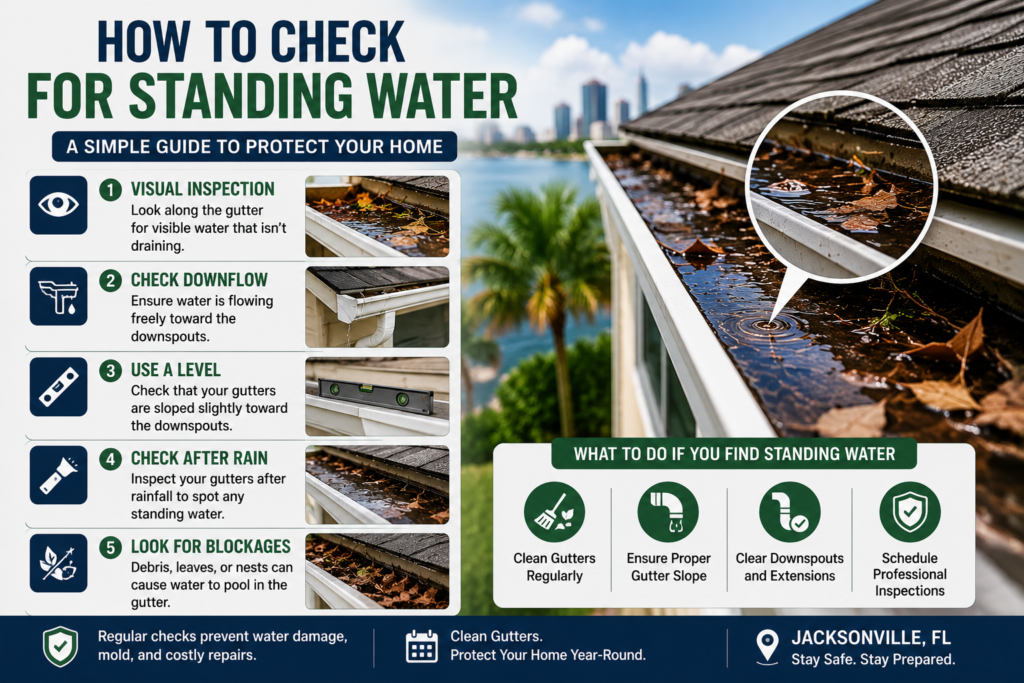
How to Check for Standing Water
After a rainstorm, inspect your gutters carefully.
Look for these signs:
-
Water sitting inside the gutters.
-
Overflow during rain.
-
Water dripping from gutter joints.
-
Sagging gutter sections.
-
Puddles near the foundation.
Finding these problems early makes repairs easier.
How Often Should You Clean Your Gutters?
Most homes should have gutters cleaned at least two to four times each year. Homes with large trees nearby may need more frequent cleaning.
A simple schedule includes:
-
Spring cleaning.
-
Before hurricane season.
-
Fall leaf cleanup.
-
After major storms.
Regular maintenance helps prevent standing water and keeps your gutter system working properly. For professional help, visit our Gutter cleaning service.
Can Gutter Guards Help?
Gutter guards help reduce the amount of leaves and debris entering your gutters.
They improve water flow and reduce the number of clogs.
However, gutter guards do not stop all debris. Small leaves, dirt, and seeds can still collect inside the system.
Even with gutter guards, regular inspections are important.
Tips to Prevent Standing Water
Simple maintenance can help keep your gutters working properly.
Follow these tips:
-
Clean gutters regularly.
-
Flush downspouts after cleaning.
-
Trim tree branches near your roof.
-
Check gutters after heavy storms.
-
Repair loose or damaged sections.
-
Inspect the gutter slope every year.
These steps help prevent standing water and extend the life of your gutter system.
When to Call a Professional
Some gutter problems require professional repairs.
Consider calling a gutter professional if you notice:
-
Large areas of standing water.
-
Sagging gutters.
-
Loose fasteners.
-
Major leaks.
-
Water damage around your home.
Professional inspections can identify problems that are difficult to see from the ground.
Conclusion
Stagnant water sitting in your gutters indicates that something is wrong with your gutter system. Some possible problems can be clogged gutters, clogged downspouts, drainage issues, and broken gutters. Routine maintenance and minor fixes will help ensure proper flow of water from your property.