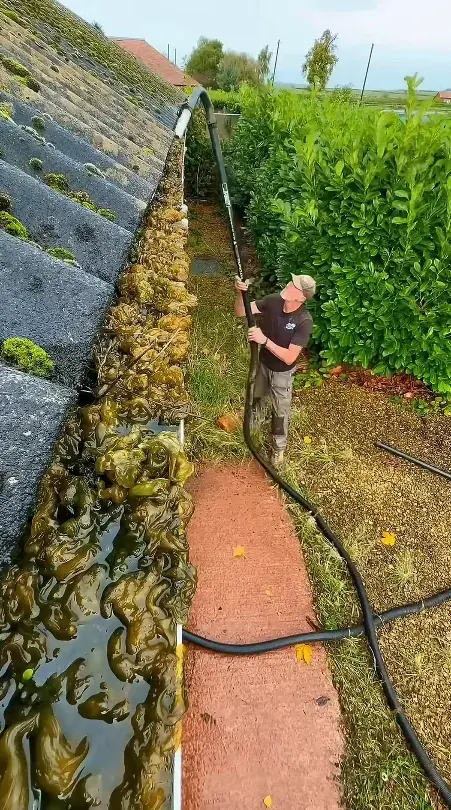
Atlantic hurricane season runs June 1 through November 30, and Jacksonville has been reminded more than once that being north of the usual landfall zone does not mean being safe. Irma in 2017 pushed the St. Johns River to record flood levels downtown, and storms that never make landfall here still drop several inches of rain in a day.
Gutters will not stop a storm surge. What they do is keep a heavy rain from going where it should not: into the fascia, behind the siding, against the slab and through the front door threshold. Here is how to get them ready, and what to check once the weather clears.
If you would rather hand it off, our crews do all of this on a hurricane season gutter cleaning visit.
Before the Season: Get It Done by June 1
- Clean the gutters after the spring oak drop. Late April to May is the window. Debris that sits until August is a soggy mat by the first named storm.
- Flush every downspout. The trough holds water. The downspout gets rid of it. Run a hose in from the top and confirm a strong flow out the bottom.
- Check the hangers. A gutter full of water is heavy, and wind adds to the load. Loose hangers are the first thing to fail.
- Point the water away. Downspout extensions or splash blocks should carry water a few feet from the foundation.
- Trim branches over the roof. Dead limbs over the gutter line come down in the first strong gust.
When a Storm Is Three Days Out
If the gutters were cleaned in spring, you mostly need a quick check, not a full cleaning:
- Look from the ground for anything new in the gutters, especially near the downspouts.
- Clear the downspout outlets and any ground-level drain grates.
- Bring in loose items near the gutter line, like hanging plants and lightweight decor.
- Take photos of the gutters and roofline. If you have to file a claim later, dated photos help show the system was maintained before the storm.
Do not get on a ladder once the wind picks up. No gutter is worth that.
Gutter Cleaning After a Storm: What to Look For
Wait until the wind has died down and any downed lines have been cleared. Then walk the house from the ground first:
- Debris in the gutters and valleys. Storms strip leaves, twigs and moss off trees. If it is not removed, the next rain washes it into the downspouts.
- Sagging or pulled runs. Look for gaps between the gutter and the fascia, or a run that dips in the middle.
- Bent or detached downspouts. Wind and flying debris knock elbows loose.
- Water stains on the soffit or siding. These show where overflow happened during the storm.
- Power lines near the gutter. If a line is down or sagging near the roof, stay away and call the utility.
Most post-storm gutter work is clearing debris and reattaching a downspout. If a run has pulled away with the fascia board, that is a repair job, and photos are what your insurer and contractor will want first.
When to Call and When to Wait
Call right away if water is coming into the house, a run is hanging loose over a walkway, or a downspout is dumping water against the foundation. Those get worse with each rain.
If the gutters are full but intact, it can usually wait a few days until crews catch up after the storm. Just keep people away from anything hanging, and check the downspouts before the next round of rain.